.Cm3NQAJw_NiM13.webp)
1. What is fear of the dentist?
Fear of the dentist, also known as dental phobia, is a common reaction in children when they are going to visit the dentist. It is often characterised by anxiety, worry or even avoidance of the visit.
In children, fear can appear in different ways, including tears, anxiety, reluctance to enter the clinic or even physical symptoms such as stomach ache. It is important to address it early, as fear can negatively affect a child’s attitude towards oral health and lead to neglect of dental care.
2. Why are children afraid of the dentist?
Fear of the dentist in children has several causes:
- An unfamiliar experience: For many children, their first visit to the dentist is new and unfamiliar, causing anxiety about what is going to happen.
- Sounds and instruments: The sound or sight of dental instruments can seem frightening to children.
- Negative stories: If a child has heard stories from other children or adults about unpleasant dental experiences, they may become afraid before they have even visited the clinic.
- A previous experience: If a child has had an uncomfortable or painful dental experience, they may associate future visits with pain or anxiety.
Understanding what causes the fear is the first step towards managing it effectively and making the visit more pleasant.
3. What are the effects of fear of the dentist?
Fear of the dentist can have long-term effects on a child’s oral health and general well-being:
- Neglect of oral care: Children who fear the dentist often avoid visits, which can lead to tooth decay, gingivitis and other health problems.
- Increased pain or complications: Delaying treatment because of fear can make problems more serious and painful.
- Fear continuing into adulthood: Fear that begins in childhood can persist into adult life, making it difficult to maintain oral health.
Addressing fear early helps children build a positive relationship with their paediatric dentist, strengthening prevention and dental care.
4. How can you help your child overcome their fear?
Preparation and support from parents are crucial in helping a child overcome their fear of the dentist. Here are some useful tips:
- Speak positively: Use positive language when talking about the dental visit. Instead of saying “it will not hurt”, say “the dentist will help us keep your teeth healthy and strong”.
- Explain what will happen: Tell your child what to expect in a simple, understandable way. You can use books or games to explain the process.
- Avoid negative words: Terms such as “pain” or “needle” can increase fear.
- Offer praise: After the visit, praise your child for being brave and do something enjoyable together.
Table: A happy child’s vocabulary
| Instead of (DO NOT SAY) ❌ | Say (YES) ✅ |
|---|---|
| “Needle / Injection” | “Magic water that puts the tooth to sleep” |
| “Drill” | “A brush that tickles / A tooth shower” |
| “Pain” | “Discomfort / Pressure” |
| “Blood” | “Red saliva” |
| “Do not be afraid, it will not hurt” | “You will see how clean your teeth will be” |
5. Our approach at the clinic to reduce fear
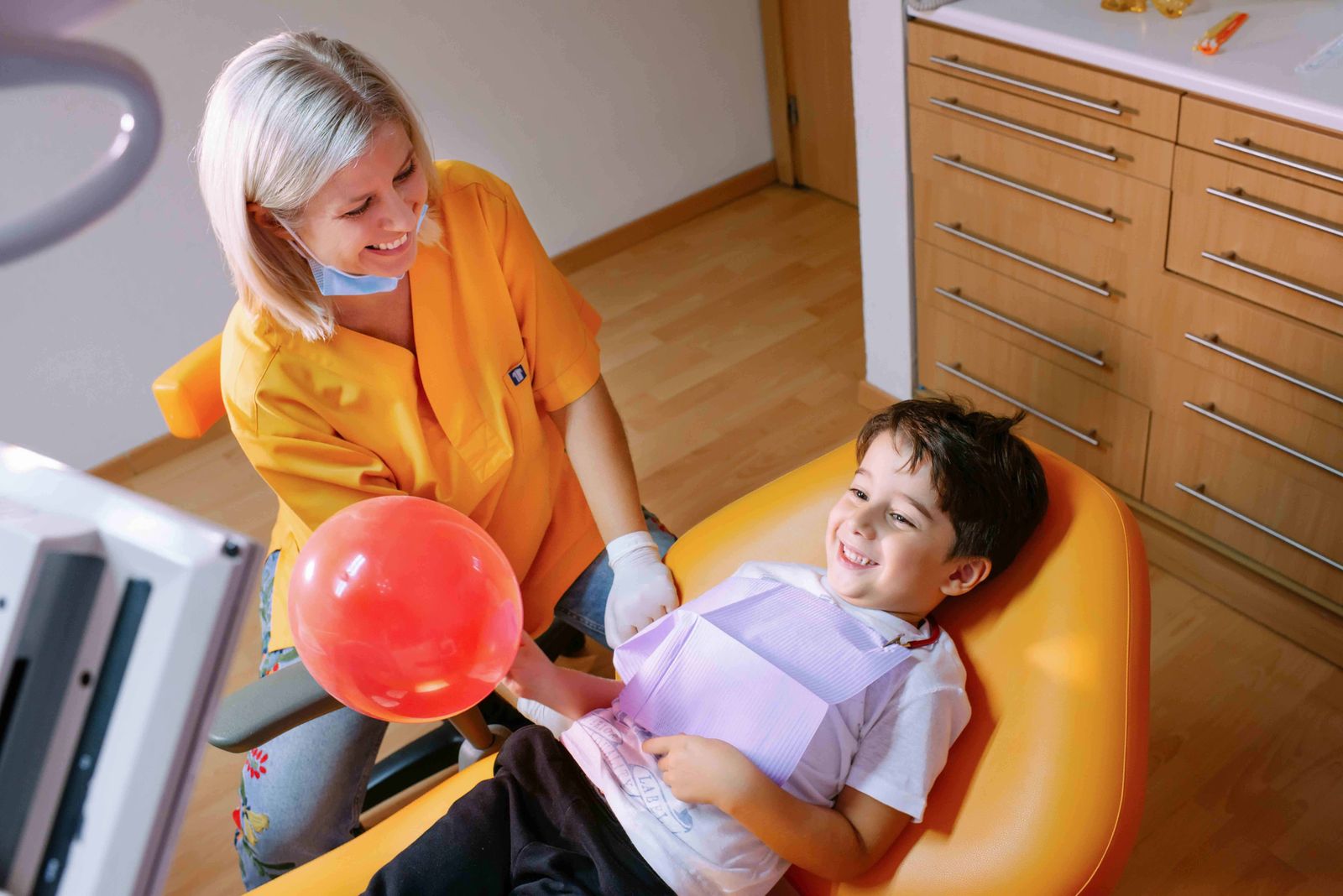
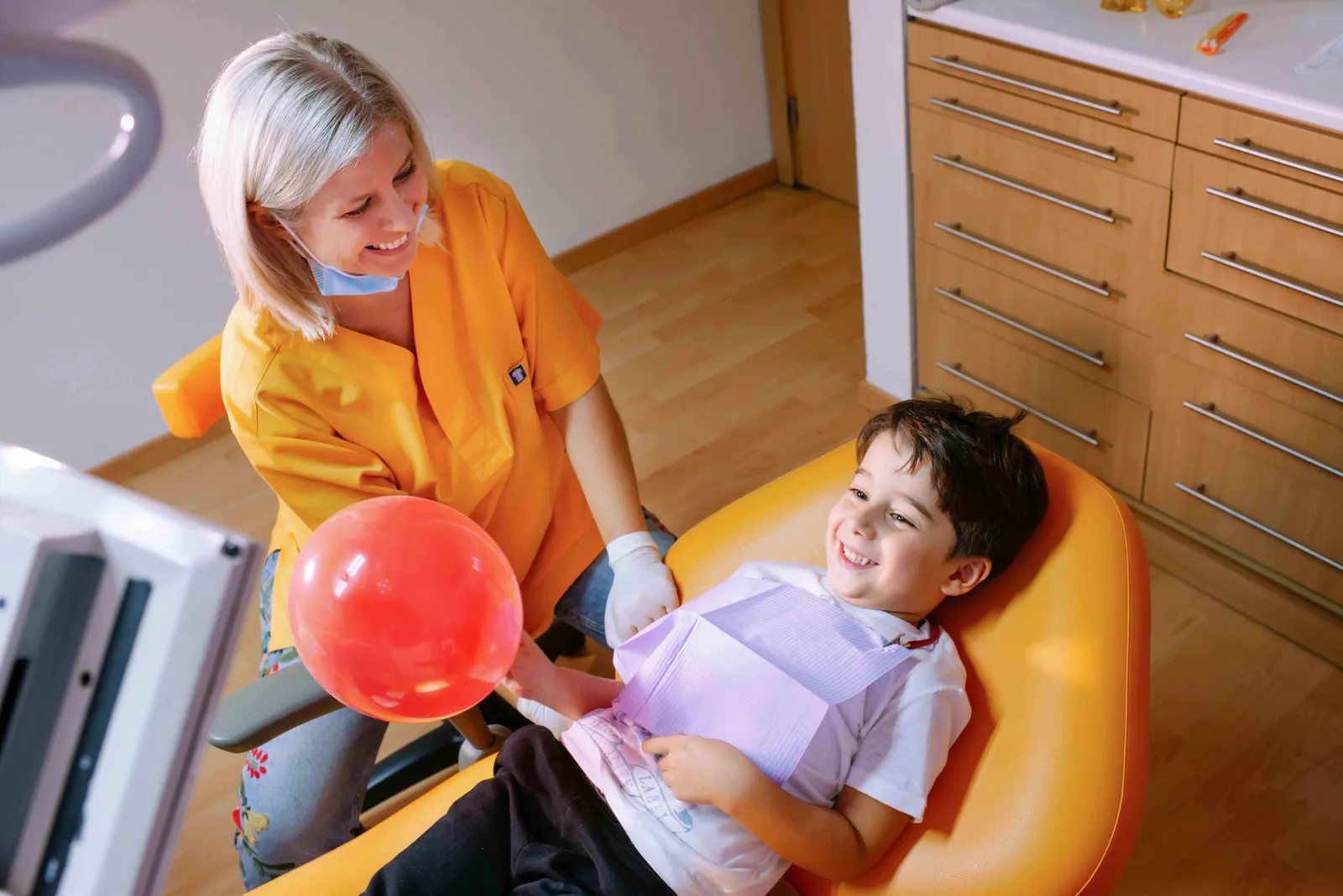
At our clinic, we place particular emphasis on creating a friendly, warm environment that helps children feel comfortable and safe.
- The first introduction: Every visit begins with a friendly conversation so the child can meet the paediatric dentist and the team.
- Play and familiarisation: We allow children to explore the space and see the instruments.
- Relaxation techniques: We use positive language, simple explanations and relaxation methods.
- Patience and understanding: We understand that every child has different needs and adapts at a different pace.
Our approach helps the child see the dentist as a friend and ally in their health.
6. Modern methods for managing fear
The use of modern technologies and techniques can dramatically reduce children’s fear of the dentist:
- Electronic anaesthesia: This provides painless delivery of anaesthetic while avoiding the use of a needle.
- Relaxing music: We create a pleasant environment with music.
- Distraction techniques: We focus the child’s attention on games or screens, including Netflix on the ceiling.
- Experiential learning (Tell-Show-Do): We show the instruments, explain how they are used and then proceed.
These methods improve the child’s comfort and confidence, turning dental visits into a positive experience.
8. The importance of addressing fear of the dentist
Addressing fear of the dentist from an early age is vital for a child’s oral health and self-confidence. Fear can lead to avoiding visits and to problems that become more serious over time.
With the right approach, dental visits can be transformed from a source of anxiety into a pleasant and positive experience.
9. Book an appointment with us today
At our clinic, we understand the needs and concerns of children and their parents. We use techniques focused on reducing anxiety and creating a safe, friendly and pleasant experience.
Call us today to arrange an appointment. Our specialist team is here to meet your child, support them and show them that dental visits can be enjoyable and beneficial. Together, we can help secure a healthy smile and a positive approach to oral care.